

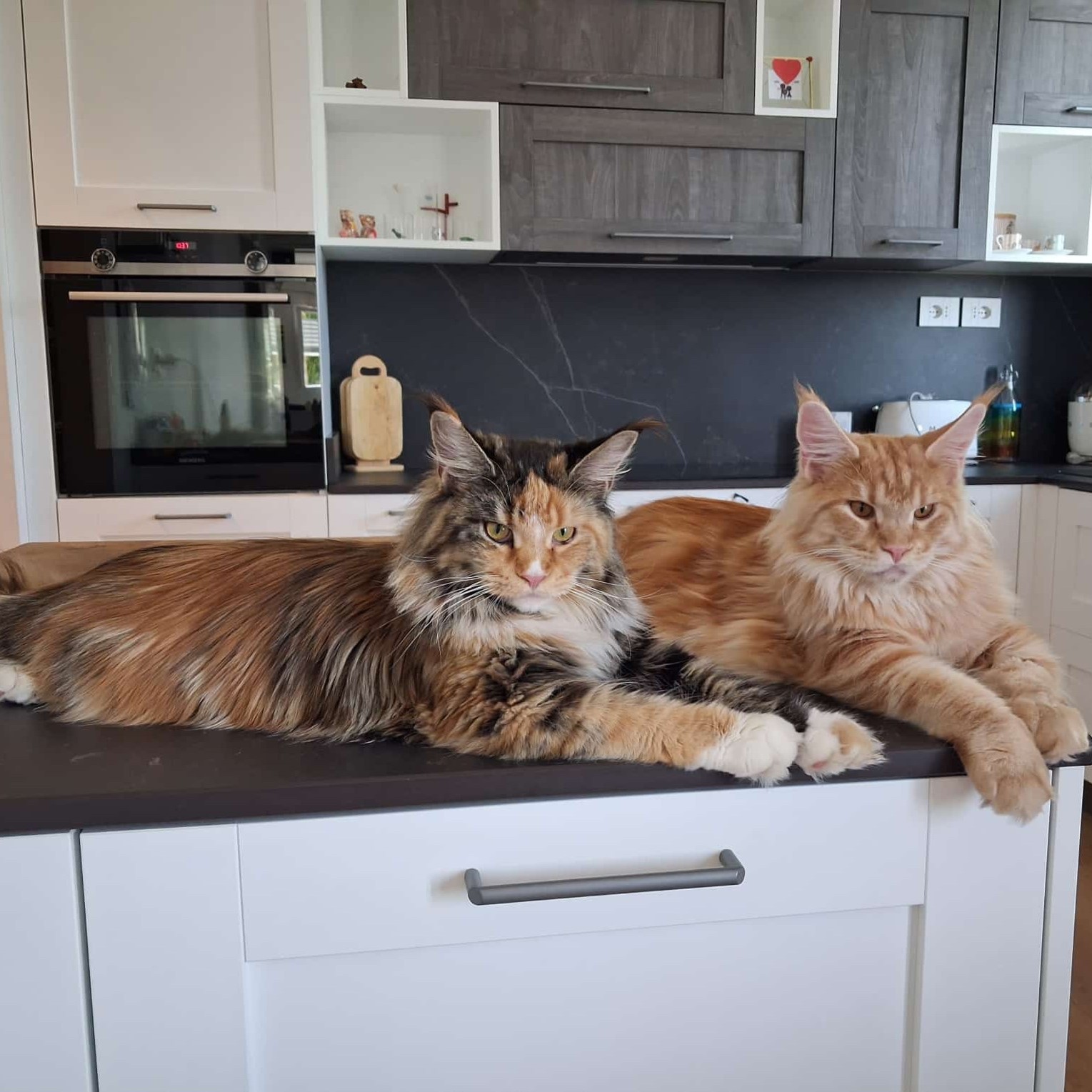
Behind every kitten that's born, there's a choice, a series of checks, months — sometimes years — of work. Breeding doesn't simply mean "letting two cats mate and selling the kittens": it means taking full responsibility for the life being created, from the genetic selection of the breeding cats all the way to the day that kitten leaves the breeder's home to join a new family — and beyond, for the rest of the animal's life.
Unfortunately, the pedigree cat market — and the Maine Coon market in particular, given its growing popularity — also attracts people who see this world purely as a business opportunity. This is where the fundamental difference between a breeder and a kitten mill comes from: two figures that may look similar to someone unfamiliar with the industry, but are in fact worlds apart.
What it really means to breed
Breeding responsibly involves:
- Conscious genetic selection: choosing breeding cats not only for looks, but for health, temperament, conformity to the breed standard, and the absence of known hereditary conditions.
- Health testing on breeding cats: genetic screening (e.g. for conditions like PKD or HCM in Maine Coons), regular echocardiograms, and infectious disease screening before every mating.
- A limited number of litters: respecting the female's biological recovery time, avoiding back-to-back pregnancies that would compromise her health.
- Daily care of the kittens: from birth to weaning, including socialisation, first vaccinations, and regular veterinary check-ups.
- Documented transparency: pedigree, health certificates, clear sale contracts, and willingness to answer any question before and after the adoption.
- Post-adoption support: a serious breeder remains a point of reference for the cat's entire life, not someone who disappears after the sale.
This isn't a bureaucratic checklist: every point represents hours of work, significant veterinary costs, and — above all — an emotional commitment renewed with every litter.
Health and safety protocols in a serious cattery
A responsible cattery follows precise protocols to protect the health of adult cats, pregnancies, and kittens:
- Quarantine for new arrivals: any cat entering the cattery (a new breeding cat, or one on loan for a mating) is kept isolated for an observation period before being introduced to the rest of the colony.
- Up-to-date vaccination protocols: core vaccines (panleukopenia, herpesvirus, calicivirus) and, where indicated, optional vaccines based on specific risk.
- Screening for major feline infectious diseases: FIV (feline immunodeficiency virus) and FeLV (feline leukaemia virus) testing on breeding cats, often repeated periodically.
- Hygiene and sanitation of living spaces: daily cleaning of living areas, regular disinfection, and separate management of maternity areas.
- Controlled, balanced nutrition: feeding plans tailored to each life stage — pregnancy, nursing, growth.
- Scheduled veterinary check-ups: not only when needed, but as part of a structured preventive care calendar.
- Early socialisation of kittens: gradual exposure to people, sounds, and handling, to raise cats that are balanced and well adjusted to family life.
These protocols take time, organisation, and a real budget. They are not an optional detail — they are what separates a cattery from a kitten-production facility.
Breeder vs Kitten Mill: the substantial difference
The term "kitten mill" describes anyone who mass-produces litters, often with no genetic or health screening whatsoever, with the sole goal of maximising the number of kittens sold in the shortest possible time. Here are the main differences:
| Real Breeder | Kitten Mill | |
|---|---|---|
| Goal | Improving the breed, health and welfare of the cats | Maximising the number of sales |
| Breeding cats | Selected, genetically and medically tested | Often untested, used repeatedly without recovery time |
| Number of litters | Limited and planned with the female's welfare in mind | Frequent, with no regard for physical recovery |
| Living environment | Social, cared for, often at home with the family | Cages, cramped spaces, poor socialisation |
| Documentation | Pedigree, health certificates, clear contracts | Missing, incomplete, or falsified documents |
| Cattery visits | Always possible and encouraged | Avoided, postponed, or flatly refused |
| After-sale support | Present for the cat's entire life | Nonexistent after payment |
The difference isn't just in how the kitten looks — often identical to an untrained eye — but in everything behind its birth, which only becomes clear by looking closely at the environment it grew up in.
Why visiting the cattery in person is essential
No photo, no video, no phone call can replace a direct visit. Going to see the cattery in person lets you verify with your own eyes:
- The real living conditions of the cats: clean spaces, stimulating environments, adequate play and rest areas.
- The health and behaviour of the breeding cats: calm, well-cared-for cats that aren't frightened by the presence of strangers.
- The kittens' socialisation: a kitten raised in a family environment, used to human contact, behaves very differently from one raised in isolation.
- Consistency between what's shown online and reality: a serious cattery has nothing to hide and welcomes visits, often by appointment to protect quarantine and the cats' peace of mind.
- The relationship between the breeder and their animals: it's easy to tell apart someone who knows every cat by name, temperament and history from someone managing numbers they can't even recall.
If a seller systematically refuses a visit, keeps postponing with excuses, or proposes handing over the kitten in a parking lot or some external meeting point, that's already a warning sign that shouldn't be ignored.
A kitten is not a stuffed toy: it's a living being, not merchandise
Perhaps the most important point of all: a kitten is not an object to buy on impulse, not an accessory, not a surprise gift to unwrap under the tree. It is a sentient being, with physical and emotional needs, that will live alongside a family for 13-17 years in the case of the Maine Coon.
This means that:
- Adoption should be planned, not decided on impulse in front of an appealing ad.
- Price should never be the main criterion: a "cheap" kitten often hides costs that aren't visible upfront — health problems, missing genetic tests, incorrect vaccinations — costs paid later, financially but above all emotionally.
- A real breeder asks questions, rather than simply cashing in: they want to understand what kind of home, family, and lifestyle will welcome their kitten, because their goal isn't to sell, but to find the right placement.
- The bond doesn't end with the sale: a responsible breeder stays available for advice, questions, or — in the worst case — to take the cat back if something in the owner's life changes drastically.
Treating a kitten as merchandise — orderable and replaceable — betrays the very essence of what it means to share your life with an animal.
Conclusion
Telling a real breeder apart from a kitten mill isn't always immediate, but some signs are clear: serious health protocols, documented transparency, willingness to allow visits, and above all a genuine relationship with their own cats, treated as part of the family rather than a source of income. Choosing consciously who to adopt a kitten from isn't just a safeguard for the buyer — it's an act of respect toward every single animal involved in this world, breeding cats included, often the most overlooked party in this conversation.
For Elinor Woods, this is exactly what breeding means: care, transparency, and total responsibility toward every life born in our cattery, from day one and forever.